Solar panels for factories, warehouses and farms across Lancashire, Yorkshire, Greater Manchester and Merseyside
Your site works for you.Your power can too.
Commercial solar, battery storage and EV charging for factories, warehouses, farms and commercial property. Designed around how your site uses electricity, installed by our own team and looked after for years afterwards.
Around £25,000a year expected saving, Advance Flavour Solutions
Case study files
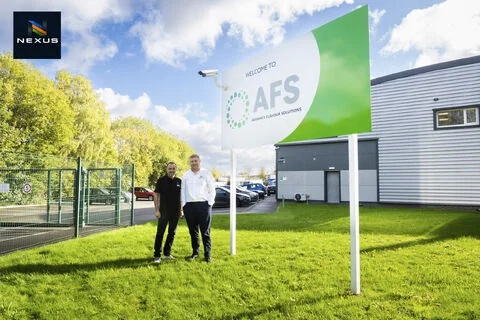
Featured project · Manchester
The project included a full factory rewire, power and distribution, data cabling, energy-efficient lighting, fire alarms, EV charging and a 50 kWp rooftop solar installation. No battery was installed.
Solar capacity
50 kWp
Installation time
1 week
Expected yearly saving
Around £25,000
Rooftop solar at Advance Flavour Solutions
AFS and Nexus on siteNexus on siteAdvance Flavour Solutions, Manchester
Project · Darwen, Lancashire
Crown Paints
Commercial electrical fit-out
Nexus took the electrical fit-out from first fix through to final finish, coordinating power and lighting with the wider interior works.
Project · Nelson, Lancashire
Hartleys Farm Foods
Plant room and hot water installation
Nexus installed a complete plant room around two Hamworthy hot water units, with pumps, controls and insulated pipework laid out for maintenance access.
Project · Blackburn, Lancashire
QEGS Blackburn
Brooklands Building rewire
Nexus rewired the Brooklands Building at Queen Elizabeth’s Grammar School, updating the electrical infrastructure for teaching spaces as part of the wider redevelopment.
Improve the building’s energy performance and make it more useful to tenants.
Assess roof condition and plans for refurbishment.
Agree who benefits from generation and how it is metered.
Plan around lease terms and tenant access.
In England and Wales, most privately rented non-domestic buildings in scope need an EPC rating of E or better unless an exemption applies. The government proposes EPC B from 2031 for privately rented buildings over 1,000 sq m where cost-effective, subject to legislation. These standards apply to lettings. Read the government update.
Put the numbers to work.
Project payback
See when the savings could cover the cost of your installation.
Solar generates while factories, warehouses and farms are running. We compare your demand with expected generation to see how much you could use on site.
Why daytime sites suit solar.
Electricity useSolar generationUsed on site: power you stop buyingExported
Illustrative. Your energy review uses your own half-hourly data.
Tax and allowances
Check which capital allowances and tax relief may apply to your installation with your accountant.
Export
Eligible sites can be paid for surplus power sent to the grid. Rates and terms vary by supplier.
Put your mechanical, electrical and renewables work under one contract, with one Nexus project lead from survey to handover. We design the systems to work together and schedule the installation around your site, saving you time coordinating trades and helping cut energy use and running costs.
Mechanical
Commercial gas heating installation and servicing
Heat pump systems for commercial buildings
Plant rooms and hot water systems, including pipework and controls
Electrical
Rewires, fit-outs and power distribution upgrades
Electrical testing, condition reports (EICRs) and certification
LED lighting upgrades, fire alarms and emergency lighting
Renewables
Rooftop and ground-mounted solar PV
Battery storage and monitoring to make better use of the power you generate
EV charging for workplaces and fleets
Is now the right time?
01Your energy contract renews in the next 6 to 18 months.
02You’re replacing a roof or refurbishing the site.
Tax treatment depends on your business, so check with your accountant.
The project route
How it works.
One named Nexus project lead takes you from the first energy assessment through to installation and ongoing support. We build the business case with you, then bring mechanical, electrical and renewables work together under one contract where it makes sense for your site.
01
Discovery and energy brief
We start with what you want to achieve, from lower running costs to electrifying heat or preparing for fleet charging. We ask for 12 months of electricity bills and half-hourly data if you have it. We also discuss operating hours, upcoming changes and when you can accommodate work on site.
What you get
A project brief with your priorities and site constraints.
A clear list of the information we need to assess your options.
02
Desktop assessment
We look at when your site uses electricity and how that could change with new equipment, heat pumps or EV charging. We compare the options that fit your brief and estimate how much solar power you could generate and use on site, with or without storage.
What you get
An initial comparison of the options worth pursuing.
The assumptions behind the estimates and what we need to verify on site.
03
Site survey
We assess roof condition and structure, electrical capacity, the grid connection and existing plant where relevant. We check where equipment and cables could go, how our engineers would access the work area and which activities would need a planned shutdown.
What you get
Survey findings your facilities team can use to plan the work.
A recommended layout and a list of any checks, approvals or enabling works needed.
04
Business case and proposal
We turn the survey findings into a coordinated design and written proposal. We explain how we estimated generation, energy savings and payback, including the tariff and usage assumptions, so your finance team can see what drives the return.
What you get
A fixed price for the agreed scope, with an installation programme.
Estimated payback and relevant tax allowance considerations for finance sign-off.
05
Installation and support
Your Nexus project lead coordinates the trades, phases the work around your operations and handles the grid application where required. We test and commission the system, walk your team through how it works and agree how we’ll monitor and maintain it after handover.
What you get
An agreed installation and maintenance plan, plus commissioning, warranty and procurement documents.
Monitoring setup and agreed reporting on generation and carbon savings.
First conversationOngoing support
Accreditations
NICEICCHAS EliteConstructionline SilverMCSRECCSigenergy Certified PartnerREFCOM F-Gas CertificatedSSIP Safety Schemes in ProcurementSocial Value badgeOZEV Approved Installer
Questions before you start
Commercial solar FAQs.
IWA insurance-backed guarantee
We can arrange IWA cover for eligible commercial installations. If Nexus ceases trading, a valid policy can back our written workmanship guarantee for the work listed on that policy.
IWA quotes commercial cover per project. The policy sets out what it covers and for how long.
Yes, with your landlord’s consent and a lease long enough to make the project worthwhile. Agree who owns the system, pays for it and benefits from the electricity before committing.
Will installation stop production?
We plan work around your operating hours and agree any shutdowns for electrical connections in advance. The survey helps us identify what can be completed while the site is running.
Our roof is old or fibre-cement. Is that a problem?
It needs checking first. We assess the structure and roof condition, and check for asbestos before any intrusive work. It may make sense to replace the roof first or consider another location.
Do we need a grid connection application (G99)?
It depends on the proposed system and existing supply. Nexus checks what your electricity network operator requires. If you need a G99 application, we submit it on your behalf and coordinate the connection requirements.
What information do you need from us?
Start with 12 months of electricity bills and half-hourly meter data if you have it. Tell us about operating hours, upcoming changes and whether you own or lease the site.
How long does a project take?
It depends on the design, roof and electrical works, equipment lead times and grid approval. We set out the expected programme in your written proposal.
Does solar raise our business rates?
Qualifying on-site renewable generation and storage equipment in England is excluded from business rates valuation through 31 March 2035. The exemption applies to eligible equipment.
How does the tax relief work?
Qualifying expenditure can usually be deducted through the Annual Investment Allowance where you have allowance available. An eligible company may have other capital allowances available. Check the treatment with your accountant.
Start with your site
Book a free energy review
Tell us about your site and how it uses electricity. We’ll explain what information we need to assess the opportunity.
Areas we cover: Lancashire, Yorkshire, Greater Manchester and Merseyside, including Burnley, Blackburn, Clitheroe, Preston, Lytham St Annes, Lancaster, Bolton, Manchester, Altrincham, Stockport, Warrington, Liverpool, Leeds, Harrogate, Ilkley, Wetherby, Huddersfield, Halifax and York.
Get a free quote
Tell us about your home or business and we’ll call you to talk through your options.
We’d like to use Google Analytics cookies to see how people use our website, so we can improve it. They stay off unless you allow them. Cookie notice
Cookie settings
We use the cookies our website needs to work, plus optional ones you can switch on below. Read our cookie notice.
Strictly necessaryKeeps the site working and remembers these settings.